
The pain point
Personal systems create too much administration.
The tools meant to help often create another job: duplicating data, rebuilding context, and maintaining several disconnected views of the same life.
Personal software · Active development
A private personal system for setting goals, tracking daily progress, and turning reflection into a clearer next action.
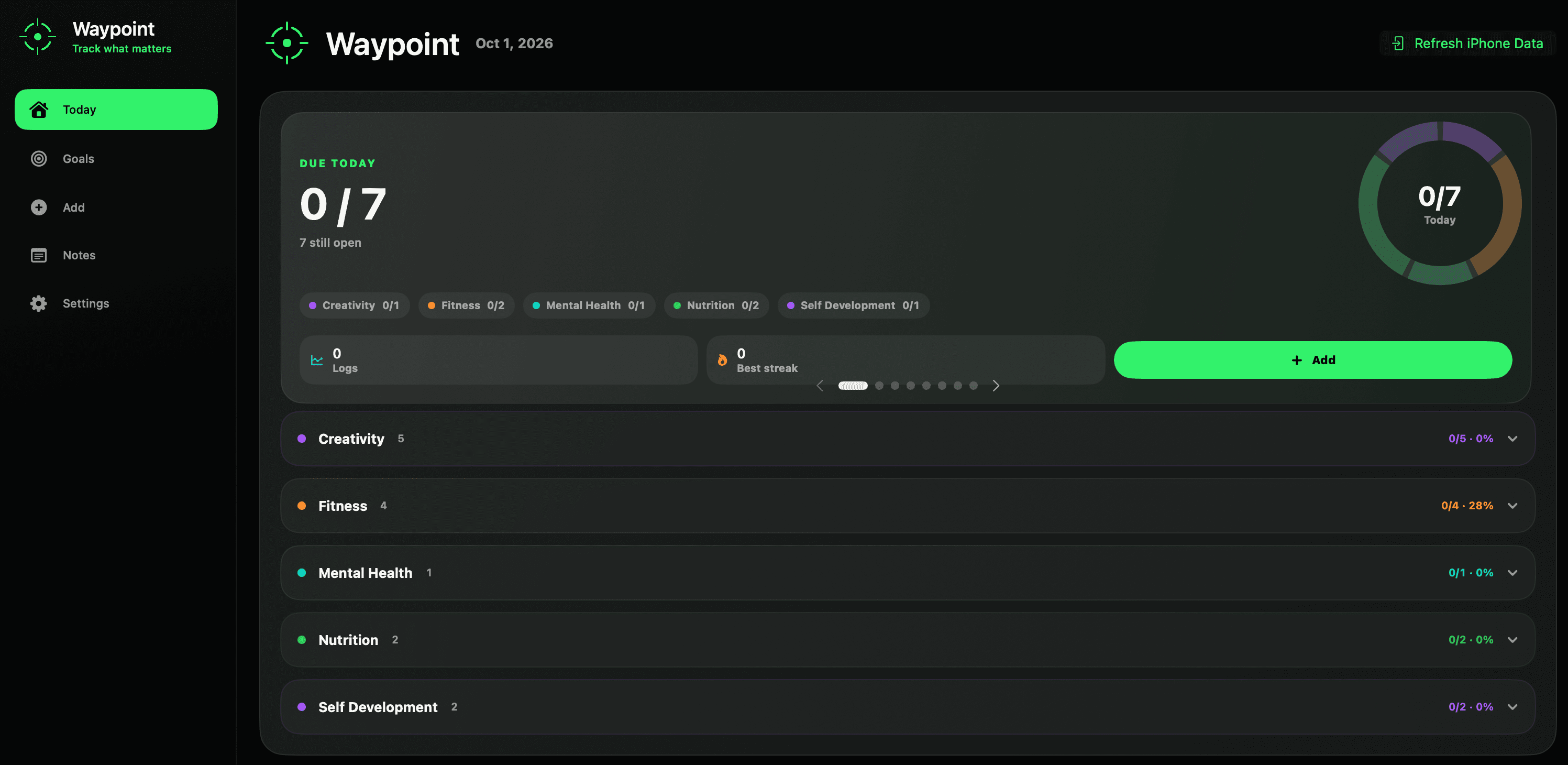
Goals tend to scatter across habit trackers, fitness apps, notes, reminders, and half-maintained spreadsheets. The information exists, but the useful context does not: what matters now, what has actually happened, and where attention is drifting.
Waypoint is an attempt to close that gap. It combines goal planning, flexible tracking, daily visibility, and reflection in a native app that remains personal and private. The point is not to quantify everything. It is to make the few things worth tracking easier to act on.
The pain point
The tools meant to help often create another job: duplicating data, rebuilding context, and maintaining several disconnected views of the same life.
The product goal
Waypoint should be fast enough for an ordinary day, structured enough to reveal patterns, and quiet enough to stay useful over time.
Product overview
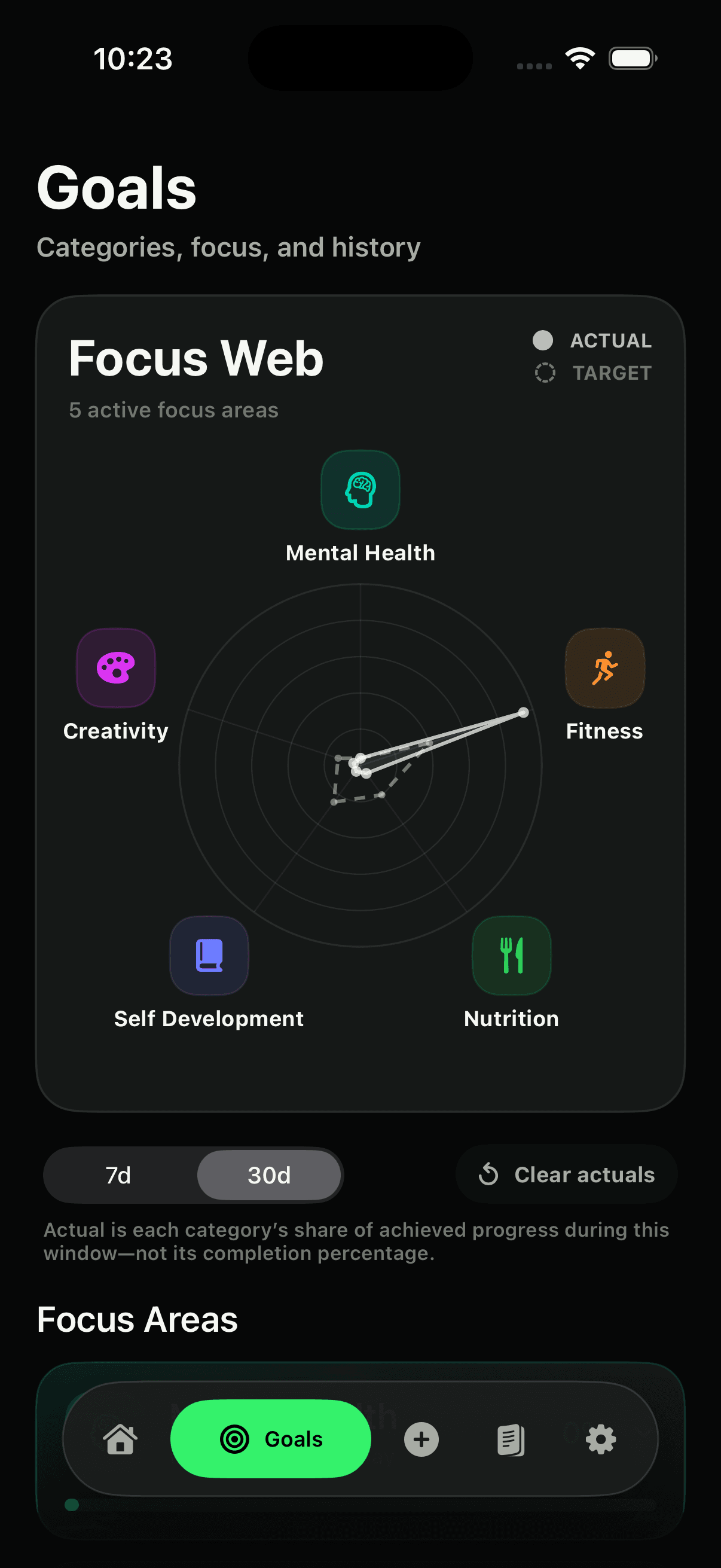
Create deadline, recurring, and ongoing goals, organize them by area of life, and give each area an honest weight. The Goal Web makes the balance—and the tradeoffs—visible.
A goal can be a simple completion, a quantity, a timed session, or a Health and Fitness metric. Daily progress stays quick to log without flattening every habit into a checkbox.
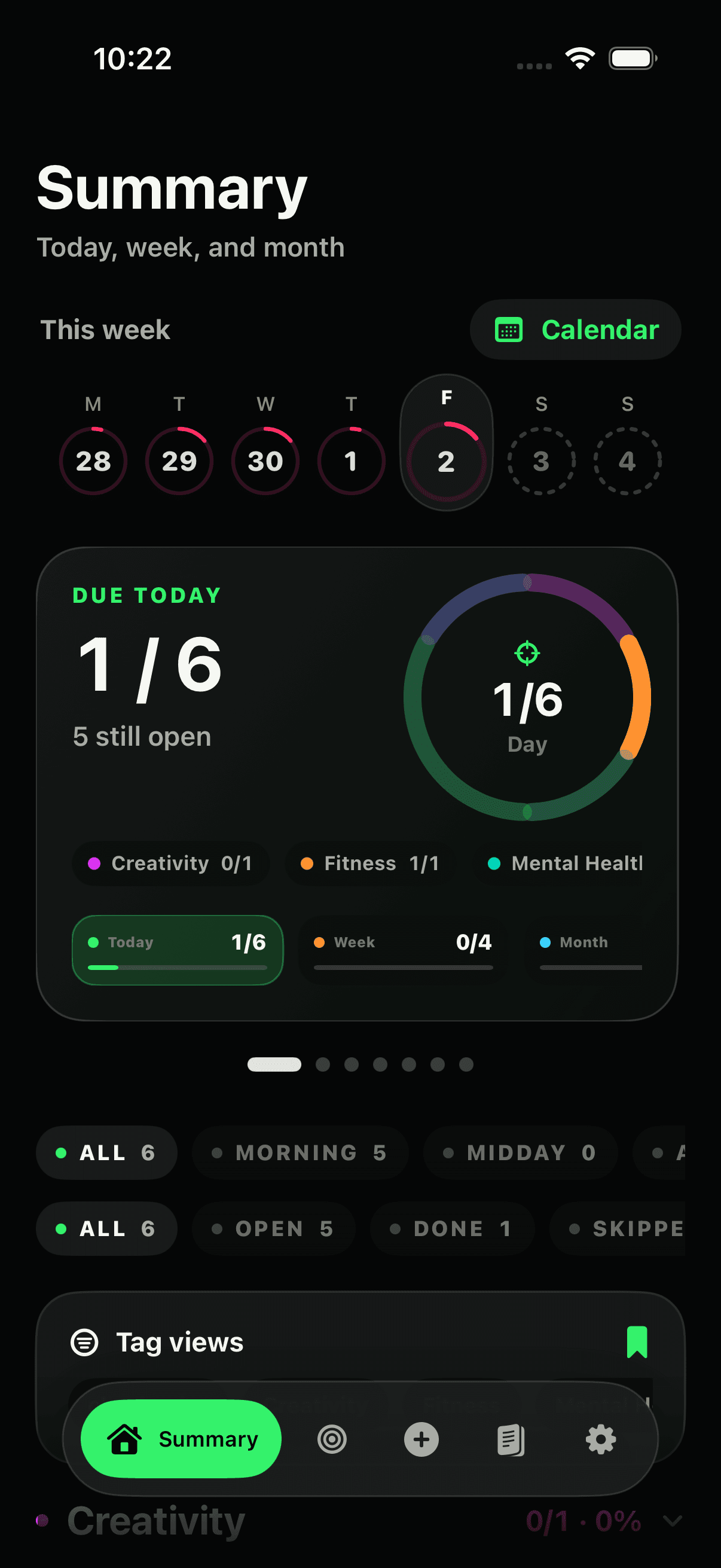
The iPhone app brings due goals, category progress, history, quick logging, notifications, and widgets into the part of the system used throughout an ordinary day.
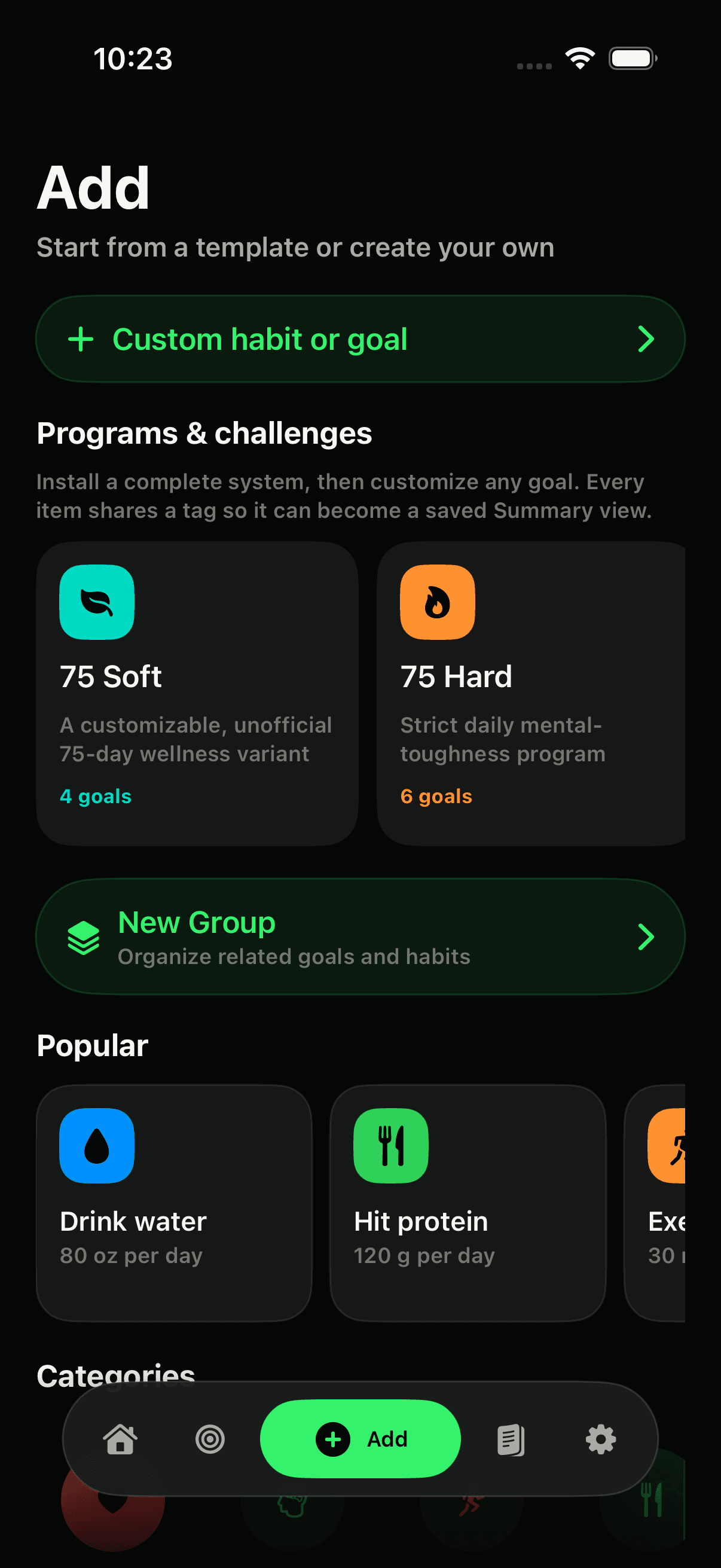
Templates, complete programs, custom goals, groups, tags, and a built-in journal make the system useful immediately without locking it into someone else’s routine.
Inside Waypoint
The Mac is the broader planning and review surface. The iPhone is the tracker-first daily companion: quick to check, quick to update, and always close by. These iPhone screens are captured from the current simulator build using the same Waypoint data as the Mac app.
Product approach
The Mac and iPhone apps are built in SwiftUI. Waypoint owns goal and habit tracking directly, including logs, schedules, groups, category weights, journal entries, and progress history. Private iCloud sync keeps that data moving between devices.
Apple Health and Fitness can supply device-native activity summaries. Notes, Reminders, Calendar, and Messages are supporting integrations—not the foundation of the core tracking experience.
What's next
The near-term work is about dependability and continuity—not adding features for their own sake.
Polish the tracker-first iPhone experience, including goal detail, templates, notifications, and widgets.
Keep the core macOS tracking and review surfaces in step with the iPhone model.
Deepen history, analytics, heatmaps, and category-level progress summaries.
Refine Calendar and Messages suggestions as conservative, reviewable beta features.
Explore Gmail and Google Calendar only after the core daily system is dependable.